Saturday, April 30, 2011
Wrapping to save the planet
Australia's Plantic Technologies has made a plastic wrapping for Easter Eggs made of corn-starch that is biodegradable. This is combination with Nestle UK, Mars UK, and Cadbury UK is evidence of a growing market for green packaging options. With the 1,200 tons of waste produced each year by Easter eggs, Plantic claims that this change in packaging could reduce carbon emission in an amount that would equal taking 140,000 cars off the road for that season. Plantic has also claimed that with Australia producing over 1.3 million tons of plastic waste per year, by replacing all of those plastic items with this biodegradable material, enough energy to power 350,000 homes could be saved. Personally, I think that this is a fantastic idea. Even though right now there are only select companies using this technology, with its increasing popularity and environmental benefit, we could be on the verge of an evolution.

Tuesday, April 26, 2011
don't buy, reuse!
Did you know that 99% of all those things we buy are not in use after 6 months? We use everything we buy so quickly and then just throw it away without thinking twice.
This week, my goal is to start reusing everything I get, or already own, for more than what it was originally made for. For example, many students like myself get food on the go from Moseley. When we get food on the go, we usually have to put it in a plastic bag. Most of us then throw the plastic bag away shortly after we have eaten the food. It’s done holding our food so why would we need to keep it?
Think again.
I plan to start keeping all of my bags and reusing them as trash bags in my room. What’s the point of buying those fancy plastic trash bags when I can just reuse plastic bags that I’m given for free? Not only will I save money, but I’ll also help decrease the manufacturing of plastic bags. Between 500 billion and 1 trillion plastic bags are used worldwide each year. While my impact will be small, I know that I’ll be saving at least 10 plastic bags per a week with this transition.
I won’t only reuse plastic bags, I’ll hopefully reuse as much as I can. From using used library books instead of buying new ones, to re-wearing my clothes multiple times before washing them (as long as they aren’t too dirty, of course), I’ll start to consume less products and will help decrease in the tremendous amount of waste that us American’s create on a daily basis.
A Way to Fix It
In response to my teammates' posts, I will be giving reasons for saving the rain forests as well as solutions to some of the problems posed by deforestation.
Carbon. One of the elements that scares humankind the most because of role in heating out planet. This element and the heating of the planet however, could be the incentive stop deforestation. With scientists estimating numbers as high as 20% of greenhouse gas emission being due to deforestation, it becomes rather obvious that this practice is not only destroying different species of animals, but could also be the destruction of humankind itself. More reasons why deforestation should be evaluated lie in the natural, medical benefits found in rain forests. Rain forests have produced most of the fruits and nuts that we eat, as well as the plant periwinkle, from which Vincristine (a major component used to fight leukemia) is extracted. In fact most of the drugs used in pharmacies in the western world were first found in rain forests instead of developed in a lab. With the destruction of rain forests, we destroy many possible remedies for various viruses, infections, forms of cancer, and even AIDS. We will be handicapping ourselves if we continue to destroy rain forests blindly without acknowledging the benefits their existence has brought us. The simple fact is that rain forests are of much more use to us standing than as timber. As my teammate said before, experts have estimated that harvesting the goods inside the rain forests as if they were crops, would be more profitable than cutting them down. The rain forests are one of our few remaining resources that would allow us to self-sufficient.
Many different solutions have been proposed, but the most realistic it seems, is to simply raise the prices of the materials that the rain forest is being stripped of. Timber, oils, etc... Since the forests are being used as production factories instead of a natural element of environmental balance, business prospects can be used to counter the destruction. Perhaps with higher prices in place, companies will be more cautious about their uses of the rain forest. Within their processes of reevaluation, the benefits of a living forest may become apparent to them.
Sources:
Carbon. One of the elements that scares humankind the most because of role in heating out planet. This element and the heating of the planet however, could be the incentive stop deforestation. With scientists estimating numbers as high as 20% of greenhouse gas emission being due to deforestation, it becomes rather obvious that this practice is not only destroying different species of animals, but could also be the destruction of humankind itself. More reasons why deforestation should be evaluated lie in the natural, medical benefits found in rain forests. Rain forests have produced most of the fruits and nuts that we eat, as well as the plant periwinkle, from which Vincristine (a major component used to fight leukemia) is extracted. In fact most of the drugs used in pharmacies in the western world were first found in rain forests instead of developed in a lab. With the destruction of rain forests, we destroy many possible remedies for various viruses, infections, forms of cancer, and even AIDS. We will be handicapping ourselves if we continue to destroy rain forests blindly without acknowledging the benefits their existence has brought us. The simple fact is that rain forests are of much more use to us standing than as timber. As my teammate said before, experts have estimated that harvesting the goods inside the rain forests as if they were crops, would be more profitable than cutting them down. The rain forests are one of our few remaining resources that would allow us to self-sufficient.
Many different solutions have been proposed, but the most realistic it seems, is to simply raise the prices of the materials that the rain forest is being stripped of. Timber, oils, etc... Since the forests are being used as production factories instead of a natural element of environmental balance, business prospects can be used to counter the destruction. Perhaps with higher prices in place, companies will be more cautious about their uses of the rain forest. Within their processes of reevaluation, the benefits of a living forest may become apparent to them.
Sources:
Suzuki, David, and Faisal Moola. "World turns to growing alternatives to deforestation of the rainforest." www.straight.com. Vancouver Free Press, 17 jun 2008. Web. 26 Apr 2011. <http://www.straight.com/article-150101/world-turns-growing-alternatives-deforestation-rainforest>.
http://www.rain-tree.com/facts.htm
Monday, April 25, 2011
Ruined Rainforests
New housing complexes, malls, a gym, an amusement park, etc., these are all reasons why our rainforests are being cut down. This is actually a big problem that needs to be dealt with. Most people don't understand the seriousness of this issue .Experts agree that by leaving the rainforests intact and harvesting it's many nuts, fruits, oil-producing plants, and medicinal plants, the rainforest has more economic value than if they were cut down to make grazing land for cattle or for timber. We are actually throwing away our money by cutting down these forests. We converted 90 percent of North America's virgin forests into firewood, shingles, furniture, railroad ties, and paper. 90 percent!!!!!!!!! That is so much!!! It's so unnecessary. Think of all of the paper, you throw away in one day. Or all of the papers your teachers hand out to you over the course of a semester. Kudos to the teachers who have everything online. My health teacher even gives us quizzes online. This is EXCELLENT.
We need the rainforest! First of all, it's beautiful. Why would we disrupt something this gorgeous? Secondly, it gives us a lot of natural resources without being cut down. Including natural remedies for health cures, spices, basic clothing and shelter. By cutting them down, we are ruining all of the natural resources.
Here are so more interesting rainforest facts:
1.)One and one-half acres of rainforest are lost every second with tragic consequences for both developing and industrial countries.
2.)Nearly half of the world's species of plants, animals and microorganisms will be destroyed or severely threatened over the next quarter century due to rainforest deforestation.
3.)There were an estimated ten million Indians living in the Amazonian Rainforest five centuries ago. Today there are less than 200,000.
4.)At least 3000 fruits are found in the rainforests; of these only 200 are now in use in the Western World. The Indians of the rainforest use over 2,000.
These facts are startling. We need to utilize or rainforests instead of chopping them down for shopping malls. Do what you can! Try to use a minimal amount of paper, print things only when necessary, support rainforest relief efforts!
Resources:
http://www.rain-tree.com/facts.htm
Friday, April 22, 2011
bye bye rain forests...
We, the Green Team, have decided to tackle the problem of rain forest depletion. While many people focus on the damage being done to our atmosphere and oceans, some overlook the damage being done to rain forests. Never realized how drastic of a problem this is? Take a look at these facts:
- Rainforests once covered 14% of the earth's land surface- now they cover a mere 6% and experts estimate that the last remaining rainforests could be consumed in less than 40 years.
- One and one-half acres of rainforest are lost every second with tragic consequences for both developing and industrial countries.
- Experts estimates that we are losing 137 plant, animal and insect species every single day due to rainforest deforestation. That equates to 50,000 species a year.
- The World Wildlife Fund says that every minute, 25 to 50 acres are being cut or burned to the ground.

To begin, along with global warming, the leading cause of rainforest destruction is deforestation. You’d think that we’d stop cutting down all of these trees since we see how few are left, but this doesn’t seem to be the case. To imagine how many trees are being cut down, visualize this: every year, Brazil chops down an area of forest the size of the state of Nebraska. Nebraska is roughly 77,358 square miles and is ranked 16th in size out of the 50 states in the United States. 16tth out of 50…that’s a pretty significant amount of land.
One of the most destroyed rain forests is the Amazon rain forest. The Amazon is not alone in this destruction, many other forests are being cut down as well. In Indonesia, Zaire, Malaysia, Burma, the Philippines, Peru, Colombia, Bolivia, and Venezuela, rain forests that were once great have been lost.
With our growing population, it has been very hard for us to cut back on this destruction. Many people need land to live on and wood products to consume. The larger our population, the more we cut down trees. This just goes to show you, all our problems seem to tie together. Limiting population growth may be the first in a series of steps that would limit the destruction of the rain forests.
If we don’t stop this now, it is predicted that half of the Amazon rain forest will likely be destroyed or severely damaged by 2030 and that’s merely the Amazon, who knows what the rest of the forests will be like. But what are the implications of this large loss? Stay tuned and you’ll find out tomorrow.
Work Cited:
http://library.thinkquest.org/26026/Environmental_Problems/rain_forest_destruction.html
Thursday, April 21, 2011
Compost it!
Hello Followers!
Have you ever got too much food than your stomach can handle? Or you can’t finish all the food on your plate? I am one of those people that get too much food and can’t eat it all. I don’t try to shove my face with food either. I just get full off of the smallest quantities of food. However, when I look at what I still have on my plate I wonder if I could put what I have to better use in the world. While walking through Moseley Center here at Elon the answer was right in front of me. Elon has in Moseley center two trash receptacles for compost. So, what is compost? Compost as defined by dictionary.com is: “a mixture of various decaying organic substances used for fertilizing soil”. This is great! But what can I compost? Essentially anything that can break down can be used as compost. More specifically the list is huge! If you click on this link the website will take you to a list of various waste and food products that can be composted. The website is http://www.plantea.com/compost-materials.htm. I highly recommend checking it out. There are things on the list that shocked me; maybe they’ll surprise you too. Based on my findings though out of everything I use to eat in a day the things that I could compost are: paper napkins, citrus wastes, stale potato chips, apple cores, bread crusts, cooked rice, banana peels, chocolate cookies, stale breakfast cereal, pickles, burned toast, and macaroni and cheese. What can compost be used for? Compost is used mainly for organic farming. However, it takes a year for a compost heap to actually be used for organic farming purposes. Why do we need to compost? If we compost we reduce the waste that goes around the globe. According to Anna Lappe, “People around the world waste 30 to 50% of food that could actually have been eaten”. This means that composting will help us recycle our food without having actually wasted any of it. The average American citizen “wastes 600 dollars in food a year by throwing it away”(Lappe). Composting is one of the easiest and fastest ways for our world to stop the ozone from depleting. This is our world and we should treat it like our own bodies, like a temple, not an amusement park.
-T
P.S.
-Our next few blog posts will be about the rainforests on our planet. They are becoming deforested and we are losing many species of animals that are affecting the food chain. Here’s a fact to get you hooked to come check out the posts. According to Anna Lappe “the biggest rain forest destruction is due to the production of palm oil”. Did your jaw drop?
Works Cited
"Compost." Wikipedia, the Free Encyclopedia. Web. 21 Apr. 2011. <http://en.wikipedia.org/wiki/Compost>.
Web. 21 Apr. 2011. <http://dictionary.reference.com/browse/compost>.
Owen, Marion. "163 Things You Can Compost." Organic Fertilizer - Organic Gardening Tips - Newsletter - Recipes. Web. 21 Apr. 2011. <http://www.plantea.com/compost-materials.htm>.
Lappe, Anna. "A Diet for a Hot Planet." A Diet for a Hot PLanet. McKinnon Hall, Elon. 20 Apr. 2011. Lecture.
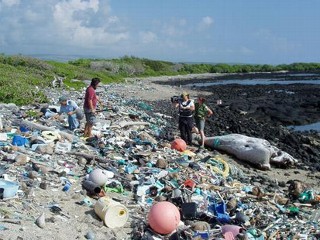

trash pick up
Growing up and living near the Ocean, it has always been a big and very important part of my life. But it is not just oceans but water in general that needs to be preserved. Our oceans provide the earth with most of our oxygen, moisture, and weather patterns. The preservation of our oceans and waters, both fresh and salt, is crucial to our world surviving. If people picked up trash around and in the ocean and other bodies of water it would do a lot for the environment. We use water for drinking as well as the oceans and the health are necessary to the earths survival. They are getting constantly more and more polluted and ruined. We pollute them with oil, trash and all types of garbage and chemicals. Look back to the BP oil spill for just one small example of this. Humans should, and must do better to preserve the oceans and waterways, they take up 70% of the globe and should be looked after accordingly, much better then they are now.
Tuesday, April 19, 2011
Fred and Little Lola
For my blog post this week I have decided to take on something to go green instead of giving up something. My roommate and I have adopted two new living creatures in our room, two potted plants named Fred and Little Lola.
NASA has been researching methods of cleansing the atmosphere and they discovered that many common houseplants and blooming potted plants help fight pollution indoors. Through photosynthesis, plants reportedly get rid of significant amounts of harmful gases out of the air. Pollutants are even absorbed and are rendered harmless in the soil.
Specifically, houseplants have an advantage over other plants at purifying our air. Houseplants are adapted to tropical areas where they are used to growing beneath dense tropical canopies and must survive in areas of low light. This makes these plants ultra-efficient at capturing light, which means that they must be very efficient in processing the gasses necessary for photosynthesis. Thus, they have greater potential at absorbing other gases, such as harmful ones.
We all knew that plants absorb carbon dioxide and release oxygen during photosynthesis, but now researchers are informing us that they have found many common houseplants to also absorb benzene, formaldehyde and trichloroethylene as well.
While NASA found that certain type of plants were better than others for absorbing these common pollutants, all plants had properties that were useful in improving overall indoor air quality. Turns out houseplants are more than just a house decoration.
-A
-A
Works Cited:
http://www.extension.umn.edu/yardandgarden/ygbriefs/h110indoorair.html
Monday, April 18, 2011
the big beautiful bright sun
After the very dramatic tornado here at Elon, we deserved some sun. That is exactly what we got. Today was beautiful. The high was around 78 degrees with almost completely clear skies. Thankfully, I was able to enjoy some of this weather by being outside. I was laying out with some friends and wanted to hop in the shower after to wash off the sunscreen. When I walked into my room, I turned on all of my lights and was about to shower when it hit me, "why do I have all of these lights on? The weather outside is beautiful, all I have to do is just open the blinds for some light." All of the lights on in my room were completely unnecessary. All I had to do was just open up my blinds for some natural light. The benefits of using natural light are countless. The greatest one is obvious. It is much better for the environment. However there are some other benefits of it as well. Studies have shown that people are more productive in natural light. From the website, http://www.buildinggreentv.com/workshop/lighting/980 I found something very interesting:
"Reduced absenteeism, employee satisfaction and higher productivity are all bottom line benefits from the use of natural daylighting. An increase of just 1% in productivity provides enough financial savings to a company to pay their entire energy bill."
So, not only is using natural light good for the environment, it's good for you too. Next time the sun is shining, hold off on the use of lighting in your room.
-The green team
"Reduced absenteeism, employee satisfaction and higher productivity are all bottom line benefits from the use of natural daylighting. An increase of just 1% in productivity provides enough financial savings to a company to pay their entire energy bill."
So, not only is using natural light good for the environment, it's good for you too. Next time the sun is shining, hold off on the use of lighting in your room.
-The green team
Saturday, April 16, 2011
Look Around You
While trying to determine a good way to inspire people to live a greener life, I took a look around and saw how many opportunities we have to do things for the earth daily. Most of us have the ability to live green if we commit ourselves to it. I think that the greatest inspiration for living a greener life is the changes that can be started because of it. I watched the movie "Food Inc." in class a couple weeks ago and a particular segment that showed a company that was successful with their endeavors into keeping their foods organic, stood out to me. Eventually, because of the popularity of the company, bigger brands started going green. I believe that the key to making world a healthier place starts with making being healthy an actual trend. Big business follows trends in order to make money and if the trend is to be green, they will supply for that demand. So the moral of all of this is firstly to open your mind to committing to being organic, and secondly spreading the trend of being green.
Friday, April 15, 2011
Get Off the Roads, Gas Guzzlers!
Let me ask you a question. What if the entire world was forced to get off the roads, no driving whatsoever for an entire week? How about an entire month? What would that do to the world. Well, I don't know about you, but I know that as a poor college kid with no income, I would be saving a lot of money!
Gas pollution takes up 33% of our country's overall carbon dioxide emissions! 33%! That means, that each day we as Americans are continually making the air we breathe dirty and disgusting to be living in. Our main source of survival, other than water, which by the way, we are polluting in other ways, is being compromised because our generation runs no, not necessarily on Dunkin, but GAS!
Did you know that from the year 1999 to the year 2005 alone, that is just 5 years, the price of gas went up from 1.13 to 2.26. Not to mention, that today, on the East Coast, gas goes for around 4 dollars average. That is a 1.84 increase since 2005 alone! Now tell me this, if a 2001 BMW gets 20 miles to the gallon, you do the math. It takes a lot to fill up that tank of gas, and I'm not talking about the physical efforts of pumping your own gas, which if you're from Jersey like I am, you don't have to do it anyway!
What I am getting at here is, what if the government forced the entire nation to go for one week without using a motorized vehicle. Sure, people couldn't commute to work, couldn't pick up their venti lattes in the morning at their corner Starbucks twenty minutes away unless they walked, etc. etc. Think about it! If we did this for one week a month, or better yet, one month per year, think of the amount of pollution we could help cancel out. And what if the entire world did this?
Everyone likes to start trends. Why not start one that helps the planet? Better yet, start a revolution. A Stop-the-Guzzling Revolution. A revolution that could help our air, and even more, help ourselves.
Gas pollution takes up 33% of our country's overall carbon dioxide emissions! 33%! That means, that each day we as Americans are continually making the air we breathe dirty and disgusting to be living in. Our main source of survival, other than water, which by the way, we are polluting in other ways, is being compromised because our generation runs no, not necessarily on Dunkin, but GAS!
Did you know that from the year 1999 to the year 2005 alone, that is just 5 years, the price of gas went up from 1.13 to 2.26. Not to mention, that today, on the East Coast, gas goes for around 4 dollars average. That is a 1.84 increase since 2005 alone! Now tell me this, if a 2001 BMW gets 20 miles to the gallon, you do the math. It takes a lot to fill up that tank of gas, and I'm not talking about the physical efforts of pumping your own gas, which if you're from Jersey like I am, you don't have to do it anyway!
What I am getting at here is, what if the government forced the entire nation to go for one week without using a motorized vehicle. Sure, people couldn't commute to work, couldn't pick up their venti lattes in the morning at their corner Starbucks twenty minutes away unless they walked, etc. etc. Think about it! If we did this for one week a month, or better yet, one month per year, think of the amount of pollution we could help cancel out. And what if the entire world did this?
Everyone likes to start trends. Why not start one that helps the planet? Better yet, start a revolution. A Stop-the-Guzzling Revolution. A revolution that could help our air, and even more, help ourselves.
FREEE T-SHIRT FOR GOING GREEN!
I know today isn't my day to post but I just wanted to share an e-mail that I received last night. A representative from Mac-Gray sent out e-mails to many universities to spread the word about how to be energy efficient when doing your wash! They have a 2 minute long video that they want all college students to watch and in response they will give each student a FREE T-SHIRT (Everyone knows college students can't say no to a free t-shirt). So, read the e-mail below, watch the short video, and get your free t-shirt!
"Good afternoon,
I’m contacting you to let you know about Mac-Gray’s 4th annual Earth Day Awareness initiative to engage students in this important dialog about environmental awareness and conservation. Thousands of students have participated in our previous Earth Day programs and we are expecting a great response again this year!
To celebrate Earth Day 2011 we are encouraging students to watch our short animated video that outlines 11 easy ways to “Green Your Laundry Routine.” If they pledge to incorporate at least one green technique into their laundry routine, we’ll send them a green-themed t-shirt. Learn more at: www.campusclothesline.com/
We’ll be tweeting and posting about this initiative and invite you to do the same. Additionally, you will receive an HTML email that can be forwarded to your students if you’d like to help promote environmentally responsible laundry habits. The email will be sent from “Mac-Gray Campus Solutions” with “Pledge to GREEN Your Laundry Routine” in the subject line. Please let me know if you do not receive it, as HTML emails sometimes get blocked by anti-spam software. We also invite you to post a notice on your residence life website/portal, and I’d be happy to provide graphics or suggested text as appropriate.
Please let me know if there is anything else I can to do help advance the important message of environmental sustainability on your campus.
Thanks!
Kourtney Barnes"
So, spread the word to all your friends and I hope to see you all wearing your free go green t-shirts in the next couple of weeks!
- A
Thursday, April 14, 2011
I Got 99 Problems But A Bottle Ain't One
Hello Again!
Well today in my Global class I was reminded of something catastrophic that is going on right now under our noses. I’m not talking about Global Warming, I’m talking about this giant island of garbage in the middle of the Pacific Ocean. I was reminded of it because I had previously learned about it in my Oceanography class in my senior year of high school. This area is filled with various plastics, as well as other types of waste, and is twice the size of Texas. The large quantities of plastic materials and garbage came from water run-offs or from the coast of California, Oregon and Washington.
So, how is this colossal mass of trash just sitting in the middle of the Pacific? From what I learned in Oceanography the water flow in the Pacific, as well as the other oceans, have gyres. A gyre, as defined from dictionary.com, is “a ring like system of ocean currents rotating clockwise in the Northern Hemisphere and counterclockwise in the Southern Hemisphere”. So this means that this garbage is gathering right in the middle of the gyre.
So, do you know how long all that trash takes to actually biodegrade or disintegrate? Upon doing research in class I found that it takes 1,700 years for a computer to biodegrade, batteries take up to 100 years, wood takes 10 to 15 years, a carpet takes 10 years, and a drop ceiling (Styrofoam) takes about 1 to 2 million years to fully biodegrade. So what about plastic bottles? Well, I found that it takes about 450 years for a plastic bottle to fully disintegrate. I thought about this and was thinking about how many plastic bottles I use on a daily basis. I use about four to five plastic bottles a day. That means I use 1,825 plastic bottles a year. That’s a lot! All I know is that when I throw away my plastic bottles in a recycling bin I feel that it is not my problem anymore or so I thought.
So, to reduce my use and become a factor hoping to influence all of you reading, I’m going to start using a Nalgene bottle to fill with various beverages. With a Nalgene bottle I will not have to worry about throwing away my bottles and thinking of where they’re going and if they’re contributing to the island’s growth. So my fellow followers, you might be reading this wondering, well this doesn’t affect me unless I live on the west coast. You’re wrong. According to Thomas Morton on News to Me “the problem with plastic is it doesn’t biodegrade, it photo degrades. A process in which it is broken down by sunlight into smaller pieces, but they still remain plastics”. Also according to News to Me there is a whole food chain that the floating plastic is disrupting. The plastic is getting into the filter feeding fish, which larger fish eat, which we catch, and then we all eat those fish. So, how does this affect us? According to Dr. Saal in News to Me “there would be early onset diabetes, problems with the liver, kidneys…effects on the reproductive system…[and]women in Japan were having miscarriages…”. If you want to see the facts for yourself the link to the video is posted below. However, to stop this epidemic we need to reduce our plastic use. I’m going to start right now by using my Nalgene bottle. I think you should too.
So, how is this colossal mass of trash just sitting in the middle of the Pacific? From what I learned in Oceanography the water flow in the Pacific, as well as the other oceans, have gyres. A gyre, as defined from dictionary.com, is “a ring like system of ocean currents rotating clockwise in the Northern Hemisphere and counterclockwise in the Southern Hemisphere”. So this means that this garbage is gathering right in the middle of the gyre.
So, do you know how long all that trash takes to actually biodegrade or disintegrate? Upon doing research in class I found that it takes 1,700 years for a computer to biodegrade, batteries take up to 100 years, wood takes 10 to 15 years, a carpet takes 10 years, and a drop ceiling (Styrofoam) takes about 1 to 2 million years to fully biodegrade. So what about plastic bottles? Well, I found that it takes about 450 years for a plastic bottle to fully disintegrate. I thought about this and was thinking about how many plastic bottles I use on a daily basis. I use about four to five plastic bottles a day. That means I use 1,825 plastic bottles a year. That’s a lot! All I know is that when I throw away my plastic bottles in a recycling bin I feel that it is not my problem anymore or so I thought.
So, to reduce my use and become a factor hoping to influence all of you reading, I’m going to start using a Nalgene bottle to fill with various beverages. With a Nalgene bottle I will not have to worry about throwing away my bottles and thinking of where they’re going and if they’re contributing to the island’s growth. So my fellow followers, you might be reading this wondering, well this doesn’t affect me unless I live on the west coast. You’re wrong. According to Thomas Morton on News to Me “the problem with plastic is it doesn’t biodegrade, it photo degrades. A process in which it is broken down by sunlight into smaller pieces, but they still remain plastics”. Also according to News to Me there is a whole food chain that the floating plastic is disrupting. The plastic is getting into the filter feeding fish, which larger fish eat, which we catch, and then we all eat those fish. So, how does this affect us? According to Dr. Saal in News to Me “there would be early onset diabetes, problems with the liver, kidneys…effects on the reproductive system…[and]women in Japan were having miscarriages…”. If you want to see the facts for yourself the link to the video is posted below. However, to stop this epidemic we need to reduce our plastic use. I’m going to start right now by using my Nalgene bottle. I think you should too.
-T
Works Cited
http://dictionary.reference.com/browse/gyre
http://www.thatdanny.com/2008/06/06/how-long-does-it-take-a-plastic- bag-or-a-glass-bottle-to-decompose/
http://www.youtube.com/watch?v=z7rNYzSH-BA
small changes, make big results
The concept of saving just a little or making one small change can do a real lot for the environment if it is done by everyone. If you make one small change a day it can really add up throughout the course of a month, a year, or a lifetime. If everyone does this then it becomes an enormous amount. A good example of this is napkin usage. Each day the average person uses 6 napkins per day (2,200) per year, if everyone uses one less napkin per day we would keep more than a billion pounds from entering landfills per year. There are millions of examples like this. Just one less napkin a day could save billions of garbage, and if this was done with many things, just imagine how much this could do for the environment. I have been trying to make changes like this, doing things like using less napkins, not using lids, etc. If just are class did this for the year we could do a lot for the environment.
Tuesday, April 12, 2011
Soda, look what you do to me...
My close friends all know that I never go anywhere without a Diet Coke or Diet Pepsi in my hand, which is usually in the form of an aluminum can. Did you know that it can take 200 to 500 years for an aluminum can to disintegrate? Well, I just found this troubling news out. So for my next goal, I want to stop using aluminum cans.
While it would be nearly impossible for me to stop drinking Diet Coke or Diet Pepsi, I want to switch from buying 12-packs to 2 litter plastic bottles as a start. While I know that plastic bottles aren’t a perfect solution, and still take a long time to disintegrate, they are better than the 12-pack of aluminum cans that I buy.

For starters, I will get a lot more out of the 2 litter bottles than I ever have in the aluminum cans. I will be able to pour out the perfect amount of Diet Coke into a reusable cup for myself, whereas I usually would grab an aluminum can and not drink all of it. Instead, I would have to just throw it out since it would go flat if I left it open. So in the end, I would be able to drink less diet coke and create less waste with the 2 litter bottles.
While some of you may be hesitant to believe that the 2 litter plastic bottles are actually better, I would like you to look at these facts from an environmental article I was reading earlier:
“The amount of petroleum used in making the 50-gram (g) and 2-liter bottle is around 325 g, and the resulting greenhouse gas emissions from its manufacture are around 825 g. An aluminum can made from virgin materials results in the emissions of 280 g of carbon dioxide. Does this mean that the can is better? Well, keep in mind that the bottle holds more beverage, so we need to take that into account. You would need to buy 5.6 cans, almost a full six-pack, to equal the volume of the bottle. The 5.6 cans would be responsible for 1,568 g of carbon dioxide emissions. So it looks like the 2-liter bottle results in about half of the greenhouse gas emissions of the equivalent amount of cans. Is this the end of the story? What about transportation emissions?
Let's assume that both beverage containers are filled in the same facility and shipped to the store with the same truck. The bottle weighs 2.05 kg when full (2 liters plus 50 g) and the 5.6 cans weigh 2.084 kg (2 liters plus 84 g). This means that the cans require slightly more fuel to transport than the bottles. That's two strikes against cans. How about a third strike? Soda bottles often find a second life in my favorite winter garments, as some clothing brands manufacture fleece in part from recycled plastic, which is melted into pellets and extruded into fine fibers. Try doing that with aluminum."
Usually, a 12-pack would last me less than a week. What is the point of wasting all of these aluminum cans if I don’t even drink everything inside of them? Why not just switch over to plastic bottles and allow myself to drink the amount of Diet Coke that I want, so that in the end I will be drinking less Diet Coke and producing less waste? While I will still be using a resource that has a long disintegration rate, I will be using less of it. I’m hoping that I’ll end up cutting my Diet Coke usage down, and solely use one 2 litter bottle per a week. Wish me luck.
P.S. If you want to check out the article I was talking about earlier go here: http://www.salon.com/life/feature/2008/01/28/ask_pablo_plastic
-A
-A
Monday, April 11, 2011
Showering: Bad for the Environment?
A few nights ago I hopped in the shower to wash away the stress of the day. It had been a particularly long day and it felt good to be in the shower, so I stayed in for about 25 minutes. As I was soaping and sudsing and enjoying the scalding hot shower I was taking, I wondered how much water and energy is used for me to take this shower. I was curious to see if the time I spent in the shower was really bad for the environment.
Well, I found out that it is. Taking a 25 minute shower at 90 degrees F uses 63 gallons of water per day. If I took showers like this for a year, I would use 22,813 gallons of water per year. Water will cost $45.65 per year and energy will cost $294.31. This is a total of $339.39. Not only is taking long showers bad for the environment, it is also pricey. If people would take on average, an 8 minute shower at a temperature of 80 degrees, only 20 gallons of water per day would be used by one person. This is a dramatic decrease. The gallons per year would drop dramatically from 22,813 to 7,300. Not to mention that the price of gallons and energy used per year would drop from $339.39 to $81.87.
So these past few days I have been taking quick showers and you should too. It's good for the environment, cost effective, and you have time to do other things.
If you have time- visit this website. It's where I got all of my info from
http://www.paystolivegreen.com/2009/01/shower-water-and-energy-use-calculator/
-The Green Team
If you have time- visit this website. It's where I got all of my info from
http://www.paystolivegreen.com/2009/01/shower-water-and-energy-use-calculator/
-The Green Team
Saturday, April 9, 2011
A week in carpooling
This week, I began a new energy conserving behavior by accident. I don't have a car on campus, and thus I am at the mercy of friends who do. On several occasions this week I have suggested carpooling as a way to get to rides to places I need to go anyway. For example, on Wednesday I needed to go the bank, I asked around for a ride, but no one was willing to help out. Eventually while talking to a friend, they let the information slip that they were going grocery shopping. I asked if I could get a ride because I knew that my bank was en route to the grocery store. I also recalled another friend whom was also without a car and asked if they could join us. With this, I successfully was able to go to the bank, and kept a friend from using another option for transportation. Today a group of friends and I decided to visit the International food market in Greensboro. We were originally planning to use three car for this trip, but with my suggestion we narrowed it down to one (with a little bit of uncomfortable closeness involved). These may be small positive actions on a larger scale, but these small actions collectively can be very helpful overall.
Thursday, April 7, 2011
Teach Me How To Laundry!
Hello again! My posting day has finally come. I want to share with all of you what I have been doing since the beginning of this school year. While I was growing up I would wear my clothes more than once and then I would put them in the laundry to be washed. I never had to do my own laundry until I arrived at college. I knew how to do it, but I was just extremely busy with sports, academics, and other activities. Arriving at college I realized that sharing washers and dryers with over two hundred people is more burdensome than one would think. My dorm does provide six washers and six dryers, but it’s always a battle to get a washer and dryer. Within my first two weeks of college I went down on Saturday morning to wash some clothes and get the task out of the way, and have fresh clothes for the next week. I was surprised when I arrived to find every washer and dryer being used and four people already in the laundry room waiting for washers and dryers to become available. I thought that since it was Saturday people had the same idea. When I heard one of my hall mates say that he wears six different outfits a day, and had to laundry every week I was amazed at how much electrical energy and water he was using a week. Now I’m not saying do not do your laundry, but learn when things should and should not be put in the laundry basket. If I wear a shirt one day and after the day goes by, I take it off, look at it, smell it, and then put it aside if it is okay for me to wear again. If vice versa than I put it in my laundry basket for laundry. However, I do have a lot of clothing, thus I only have to do laundry maybe twice or maybe three times a month. I decided to do some research on the washing and drying machines in the dorms. I found that the washing machines in the dorms are front loading washers and dryers. The front-loading washers “..the clothes do not sit in a tub of water. Rather they tumble through a layer of water as the drum rotates. This allows for a tremendous reduction (60% less) of the water required”. Also, the “front load washers cut water use by nearly 40 percent. A typical top-loading washer uses about 40 gallons of water for each full load”. Using a front-loading washer “…you could save as much as 7,000 gallons of water per year”. On top of that if you follow what I have been doing with my laundry you could double or triple that number. Having clean water is something extremely valuable. Not every community around the world has fresh water. With this type of water conservation more water could be supplied to other countries or areas in desperate need of clean drinking water.
-T
Works Cited
"Clothes Washers - Energy Choices at the Home." Consumer Energy Center - Information for the Consumer about Saving Energy from the California Energy Commission. Web. 07 Apr. 2011. <http://www.consumerenergycenter.org/home/appliances/washers. html>.
"Front Loading Washing Machine Facts." Tidbits & Stuff. Web. 07 Apr. 2011. <http://www.tidbitsandstuff.com/household-tips/laundry/139-front-loading-washing-machine-facts/>.
Wednesday, April 6, 2011
Paper Usage
A student as devoted and concerned about getting the most out of their education as I do, takes pages upon pages of notes and uses up notebooks like crazy. This being said, though I study no less diligently, I have been committed to using both sides of the sheets of paper. Also, I have been making sure that the printers I am using are set to double sided. So, in effect, I have been using more or less half the paper I was before.
Finally, I get the Wall Street Journal for my business. Before, I would throw it away, whereas now I go downstairs to use the recycle bins. Each day there are over 63 million newspapers printed daily in America and nearly 70% of those are thrown away. If everybody just started recycling their Sunday papers, nearly half a million trees would be saved every week.
Finally, I get the Wall Street Journal for my business. Before, I would throw it away, whereas now I go downstairs to use the recycle bins. Each day there are over 63 million newspapers printed daily in America and nearly 70% of those are thrown away. If everybody just started recycling their Sunday papers, nearly half a million trees would be saved every week.
Tuesday, April 5, 2011
Enough energy to power 100,000 homes
What does every college student have in this technological era? A cell phone. What does every cell phone have? A charger.
Did you know that cell phone chargers still drain power even when the cell phone ISN’T PLUGGED INTO the charger? This also applies to your laptop, Ipod, camera, or any other device that may have wall-rechargeable batteries. So my first challenge is to start off by always unplugging my cell phone charger when I’m not using it.
Like the post before me, while I don’t like to admit to it, one of the main reasons why I usually keep my charger plugged in is because it can just be an annoyance to have to unplug it. I keep my phone charger plugged into the outlet behind my bed, which is in the corner of my extremely tiny dorm room. To get to the outlet, I have to pull all of the boxes out from under my bed and then crawl under my bed to pull out the charger. It’s a rather lengthy process and it used to seem like the results from unplugging my charger wouldn’t be worth the effort.
This is where the problem starts. Most of us can be lazy about simple tasks like unplugging a charger, or turning off the lights, just because it may be an annoyance. While we once never realized that our carelessness was going to harm us, we are finally starting to see the results and find out the truth behind our laziness.
It may seem like a small amount of energy for each device, but as more and more people feel the same way that I used to, this bad habit of ours can slowly add up to a lot of wasted energy.
If you don’t believe me then look at this statistic in Matter Magazine,
“Let's just look at cell phones, of which there are an estimated 190 million in the United States. A quick back of the envelope calculation says that the combined stand-by usage of all those cell phone chargers, each drawing a measly watt, could add up to 190 megawatts per day. That's enough to power approximately 100,000 homes.”
So here’s a start to take get rid of this HUGE waste of energy.
For me, I think I’m going to start by finding a new place to plug my phone charger. I’m not the biggest fan of crawling under my bed.
Keep your outlets open. Spread the word.
- A
Monday, April 4, 2011
Lamp Struggles
Happy Monday everyone!
This going green assignment is a FABULOUS idea. I am slightly embarrassed to say that I personally am not a particularly green person. I don't usually pay attention to those messages encouraging citizens to "go green." But that is all going to change! I am psyched to be in this group for the project because I am really truly going to dedicate myself to going green. Any change that I can make for the environment is worth it.
Today I did something simple that most people are probably going to think is pathetic but I think it's quite amazing... I turned my lamp off when I left the room. Yes, folks I don't usually do that. I know that is quite pathetic because almost everyone has learned from age 3 to turn the lights off when you leave the room. The problem is that my lamp is all the way in the opposite corner of my door, so when I turn the lamp off, I have to struggle and trip my way over in the dark to the door. I am aware that is the worst excuse ever, but hey I am making a change. So from now on, my lamp will be turned off and I will just have to struggle into the darkness for the 1.4 seconds it takes to walk to the door. You're welcome, Earth.
Hopefully next Monday I can report that I have stuck to my turning off of the lamp rule and also that I have done something maybe a little more drastic than turning off a light but hey... it ain't easy being green!
-The Green Team.
This going green assignment is a FABULOUS idea. I am slightly embarrassed to say that I personally am not a particularly green person. I don't usually pay attention to those messages encouraging citizens to "go green." But that is all going to change! I am psyched to be in this group for the project because I am really truly going to dedicate myself to going green. Any change that I can make for the environment is worth it.
Today I did something simple that most people are probably going to think is pathetic but I think it's quite amazing... I turned my lamp off when I left the room. Yes, folks I don't usually do that. I know that is quite pathetic because almost everyone has learned from age 3 to turn the lights off when you leave the room. The problem is that my lamp is all the way in the opposite corner of my door, so when I turn the lamp off, I have to struggle and trip my way over in the dark to the door. I am aware that is the worst excuse ever, but hey I am making a change. So from now on, my lamp will be turned off and I will just have to struggle into the darkness for the 1.4 seconds it takes to walk to the door. You're welcome, Earth.
Hopefully next Monday I can report that I have stuck to my turning off of the lamp rule and also that I have done something maybe a little more drastic than turning off a light but hey... it ain't easy being green!
-The Green Team.
Saturday, April 2, 2011
Plastic Bottles and Cups
Hi, I'm the Saturday poster for Living the Green Life! My post is about making a commitment to recycling plastic bottles and cups. Over the past couple of days this new goal has helped me realize how many non-biodegradable things I put into the environment daily. Between bottles of water, juice, sodas, and cups of fruit, or iced coffee among other things, I can say I easily toss at least ten plastic items into the environment daily without a second thought. With our new study focus being the health of the Earth, I find that it was important for me to find out this fact about myself and make a permanent adjustment to it. Admittedly, it can be a little annoying having to leave my room and walk down the hall in order to deposit the bottles/cups into the recycling bin in my dorm common room, but I've started to think of it as protecting the environment while protecting myself from my own laziness.
Friday, April 1, 2011
The Purge of Pesticides!
Welcome, again to our Going Green Blog! I hope you enjoy the blog, as we have and continue to work very hard on it! Each of us has to give up something as part of this project, and this week, my personal goal is to give up using lids on the cups that I use. You see, the lids are made of plastic, and the plastic isn't good for the environment as many of us are aware. To end the use of lids was a practice I heard of recently, and makes a lot of sense, given the fact that it helps reduce the usage of plastic. As many like myself want to reduce their carbon footprint, become environmentally friendly, go green as it were, I find this to be a very good way to do just that.
Like so many of my fellow classmates, I enjoy drinking tea. With my tea, I like to put honey to add some flavor. As we all know, honey is made from bees. While these black and yellow creatures produce this tasty treat, recent studies have been done on what is used to help produce this delectable condiment. It turns out that the things that go into our honey aren't as natural as we think. The New York Times has written a recent story that discusses exactly what pesticides are interfering with the production of the honey. As the busy bees work their way to create the honey, lots of things, like many different kinds of pesticides are making their way into our honey.
In the article, they describe a pesticide that is related to nicotine, and has been banned from Germany and Italy, where a lot of the honey we eat is manufactured originally. It is no wonder they ban this pesticide, as it causes many problems for the honey being produced! If you want more details, read the article, but I can say this: It is no wonder that more and more people everyday are trying to keep things local, eat only organic foods, without any pesticides. The things they are putting in our foods isn't always good for us!
As I continued my research, I've found an interesting website that can tell you EXACTLY what is in our food. Clearly going for originality, it is called, Whatsinmyfood.com. After googling pesticides in honey, according to this website there are, get ready for this, a total of TWELVE pesticides in honey alone! Twelve! Definitely check out this website for a full list, but to me, that seems a little unnerving. If twelve pesticides are in honey, how many pesticides are in other foods???
Maybe I'll give up all foods that contain pesticides for next time. Why do I feel like I'm going to be rather hungry during the next few days.....
Like so many of my fellow classmates, I enjoy drinking tea. With my tea, I like to put honey to add some flavor. As we all know, honey is made from bees. While these black and yellow creatures produce this tasty treat, recent studies have been done on what is used to help produce this delectable condiment. It turns out that the things that go into our honey aren't as natural as we think. The New York Times has written a recent story that discusses exactly what pesticides are interfering with the production of the honey. As the busy bees work their way to create the honey, lots of things, like many different kinds of pesticides are making their way into our honey.
In the article, they describe a pesticide that is related to nicotine, and has been banned from Germany and Italy, where a lot of the honey we eat is manufactured originally. It is no wonder they ban this pesticide, as it causes many problems for the honey being produced! If you want more details, read the article, but I can say this: It is no wonder that more and more people everyday are trying to keep things local, eat only organic foods, without any pesticides. The things they are putting in our foods isn't always good for us!
As I continued my research, I've found an interesting website that can tell you EXACTLY what is in our food. Clearly going for originality, it is called, Whatsinmyfood.com. After googling pesticides in honey, according to this website there are, get ready for this, a total of TWELVE pesticides in honey alone! Twelve! Definitely check out this website for a full list, but to me, that seems a little unnerving. If twelve pesticides are in honey, how many pesticides are in other foods???
Maybe I'll give up all foods that contain pesticides for next time. Why do I feel like I'm going to be rather hungry during the next few days.....
Subscribe to:
Comments (Atom)